
One of the biggest bottlenecks in forest health work is what happens after small-diameter, low-market trees are removed. If there’s nowhere nearby to process timber, everything slows down—and costs go up. A lot. Tahoe Truckee Community Foundation (TTCF) knew from the early days of Forest Futures salons in 2016 that small, local biomass facilities were among the only ways to move that bottleneck.
For the past year, we’ve been investing in our own Woody Biomass Portfolio, which uses a blend of traditional grants and impact investments to bring these solutions to life.
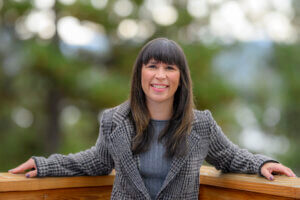
Saché Cantu, TTCF Chief Operating Officer, sat down with us to break down Impact Investing, TTCF’s Forest Futures Regenerative Loan Fund, and the strategy and structure of this work.
Tell Us a Bit About You, Saché
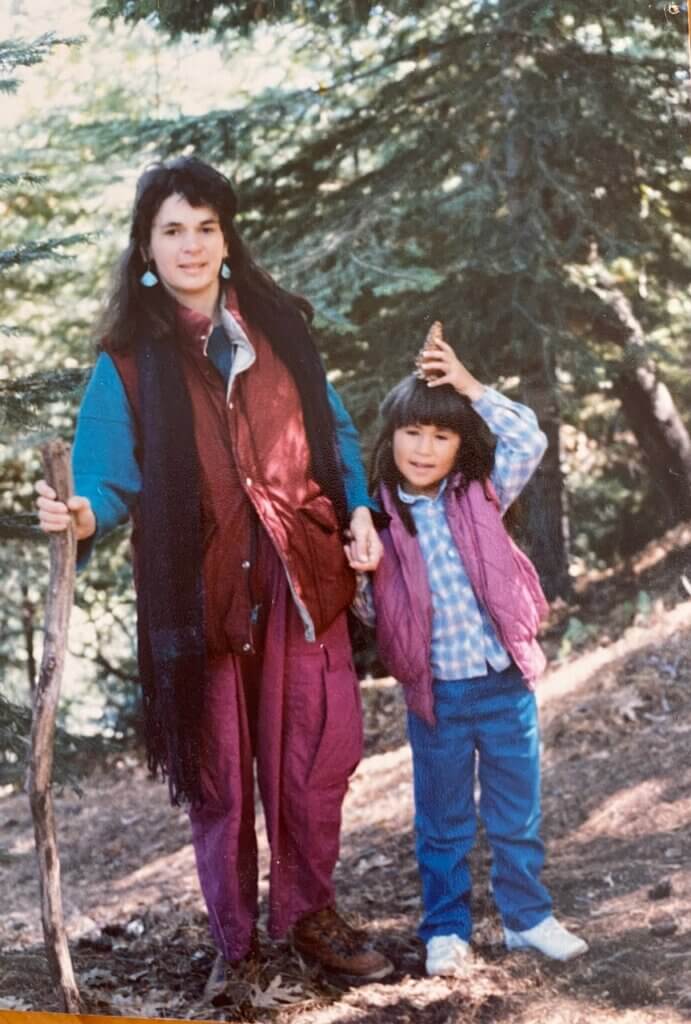
Sure thing! I was born in Oakland, California, and my family moved up to Grass Valley when I was five years old—prime time for becoming a foothills kid. I come from a family of artists, which probably explains why I’ve always approached problem-solving a little differently. Creativity isn’t just for culture and expression—it’s for systems, too.
After a few decades of school and work in bigger cities, I made my way back home (as one does). I met my sweetheart in Truckee, and now I live across the street from a house I grew up in. Full circle moment.
Where It Started: The CDFI Origin Story
Career-wise, I got my start at a Community Development Financial Institution (CDFI)—which is a fancy way of saying a nonprofit lender that helps small businesses that banks overlook for traditional loans. We looked beyond credit scores—we asked questions like, “Does this business create jobs?” Does it provide something the community actually needs?
At the CDFI, we didn’t just hand out loans and wish people luck. We paired financing with small-business coaching—so folks had a real shot at succeeding. And here’s the cool part: when loans got repaid, that money went right back out to support the next entrepreneur. Same dollars, new impact. Rinse and repeat.
Real change happens when you blend tools. Public funding, philanthropy, and investment capital all have a role to play. No one lane gets us where we need to go.
From CDFI to TTCF
During COVID, I was working as a corporate grantmaker and, like a lot of people, asking myself how I could show up more locally. A mutual friend introduced me to Stacy Caldwell, and I started volunteering—first with housing policy folks, then with TTCF’s Forest Futures Initiative (shoutout to online salons keeping us all connected).
Fast forward about six months, and Stacy and I were deep in conversations about building a loan fund for forest health work. One thing led to another, and I made the leap from volunteer to TTCF’s first Director of Impact Investing. (Since then, I have moved into the role of Chief Operating Officer).
No big deal. Just a casual life pivot.
So What Is Impact Investing, Exactly?
Okay, for my wonky friends out there, here’s the official definition: Impact Investing is investing with the intention to generate positive social and environmental impact alongside a financial return.
But for the rest of us: It’s using money as a tool for good—and getting that money back so you can do it again.
TTCF loves grants. They fund everything from basic needs to student success to community vitality. But sometimes what a project really needs is capital that sticks around—money that helps something get built, launched, or scaled, and then comes back to be reused.
That’s where impact investing comes in.
We can offer a loan with more flexible terms or accept a lower financial return, given the high community return. Especially in a rural region like ours, where access to capital can be tough, that flexibility can unlock projects that otherwise wouldn’t happen.
This Isn’t New for TTCF
One of the things I love telling people is that this isn’t some brand-new, shiny thing TTCF just discovered.
TTCF’s Board and team have been doing this since 2014. Before I arrived in 2021, more than $2 million had been deployed through mission-related investments. With MRIs, instead of awarding a grant, the Foundation invests funds in projects or companies that are doing good in the world which both advances its mission and earns a financial return.
These MRIs included:
- Supporting family strengthening through the purchase and renovation of a Kings Beach motel, which became Community House;
- Investing heavily in housing, including the Truckee Artist Lofts;
- And setting the stage for forest health, which is where Forest Futures comes in.
So really, my job wasn’t to invent something new—it was to build the structure to do more of it, on purpose.
Building the Framework
And by “structure,” I mean policies, guidelines, all the things that make sure we’re being both bold and responsible in managing risk. When our Board approved TTCF’s first Program Related Investment (PRI) Policy and Credit Guidelines in 2023… I’m not going to lie, I got a little teary-eyed. Because that moment meant we had done it—we created a clear, repeatable way to invest in our community while honoring our fiduciary responsibility. (Yes, I can be both a softie and a finance nerd. Two things can be true.)
It also meant we could expand beyond just simple loans into a broader set of tools to support local entrepreneurs and projects.
Translation: we now have more ways to say “yes” to good ideas.
Impact Investing in Action: Alpenglow Timber
TTCF’s Forest Futures Impact Strategy includes protecting our communities from catastrophic wildfire, stewarding our forests, and building a forest economy. To date, Forest Futures has treated 140,000 acres and
funded 70+ projects that have educated our community, mitigated wildfire risk, and treated our forest ecosystems for generations to come. As early Forest Futures advisors will remember, we knew the third phase would require flexible dollars. We would need impact investments. TTCF is currently building and activating our Regenerative Loan Fund.
For the first two investments of our Woody Biomass Portfolio, TTCF made grants to nonprofit entities: the Sierra Institute for Community and Environment and Northstar Community Services District Wood Energy Facility (read more here).
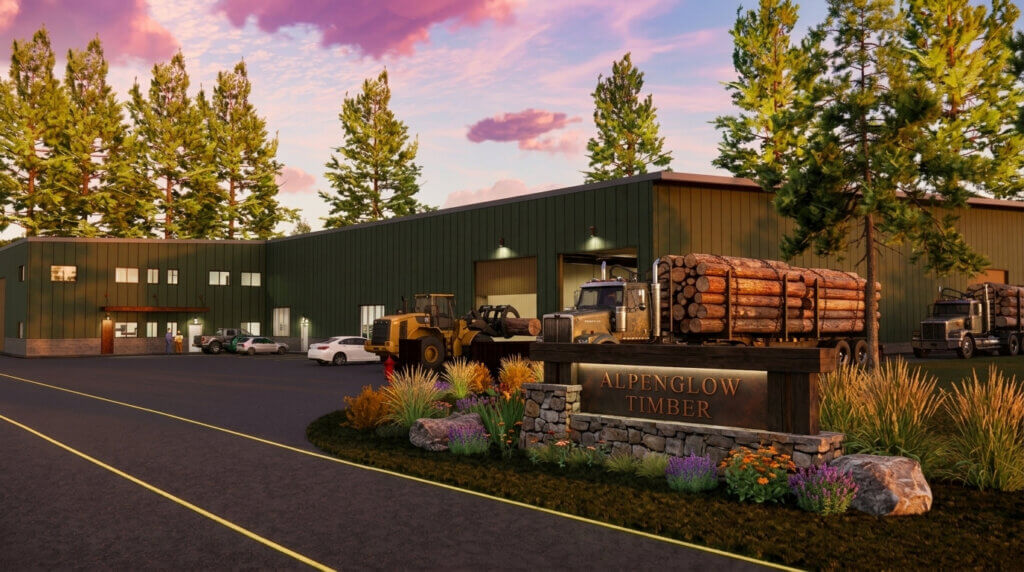
Enter Alpenglow Timber, a private entity.
We had been in conversation with the owner, Dave Mercer, for over three years. Three. Years. This wasn’t a quick decision. We saw the bigger picture: local forest projects were getting stuck because there wasn’t enough processing capacity nearby. Meanwhile, a business was trying to expand to meet that need.
So TTCF stepped in with a bridge loan—a short-term loan that helps cover the gap while someone waits for longer-term funding. That investment helped Alpenglow keep moving forward—and it’s also sending a signal to other funders: this is worth investing in.
That’s another role we play. Sometimes we’re not just funding a project—we’re helping prove it, so others come to the table.
To any entrepreneurial or investment-minded donors or funders out there who want to invest in our Regenerative Loan Fund, give us a call at 530-587-1776 ext. 100 to start the conversation.
Parting Words
Roots are super powerful—personally and professionally.
For me, bringing impact investing to life at TTCF isn’t just about financial tools. It’s about taking everything I’ve learned out in the world and bringing it home in a way that actually makes a difference here.
Also, quick throwback: my big brother and I used to watch The A-Team, and at the end of every episode, Hannibal would say, “I love it when a plan comes together.”
Honestly? Same.
Further Reading:
This conversation is one piece of a larger story. To see how TTCF’s impact investments connect to the organization’s long-term vision, read Stacy Caldwell’s, CEO, April 2026 article, “A Candid Look at the Strategy Behind the Impact: TTCF’s Portfolio Approach.“
- Browse All Categories
Share this post
- Browse All Tags
- Achievable Housing
- Alpenglow Timber
- Behavioral Health
- Biochar
- Biomass
- Board Governance
- Board of Directors
- Building Resilience from the Forest Floor Up Series
- Business Philanthropy
- Cabin Creek Biomass Project
- CAL FRAME
- Collaborations
- Collective Impact
- Community Collaborative of Tahoe Truckee
- Community House
- Community Impact
- Community Resilience
- Community Wildfire Protection Plan
- Cross-Laminated Timber (CLT)
- Cultural Burning
- Defensible Space
- Economic Opportunity
- Education
- Emergency Preparedness
- Families
- Financial Stewardship
- Fire Resilience
- Fire-Resistant Construction
- Forest Futures
- Forest Futures Salon Series Winter/Spring 2025
- Forest Futures Scholarship
- Forest Restoration
- Forest Workforce
- Fundraising
- Give Back Tahoe
- Giving Tuesday
- Grant Cycle
- Grantmaking
- Home Hardening
- Housing
- Impact Investing
- Insurance
- Leadership
- Leadership Development
- Lunch and Learn
- Martis Fund
- Mass Timber
- Mental Health
- Mountain Housing Council
- National Forest Foundation
- Nonprofit Board Governance Series
- Nonprofit Leadership
- North Tahoe Biomass Task Force
- Northstar Energy Facility
- Partnerships
- Philanthropic Education
- Philanthropy
- Prescribed Fire
- Press Release
- Queen of Hearts Women's Fund
- Regenerative Economy
- Renewable Energy
- Scholarships
- Sierra Institute for Community and Environment
- Stewardship
- Strategic Planning
- Sustainability
- Sustainable Housing Solutions
- Tahoe50
- Training
- Volunteering
- Wildfire Insurance
- Wildfire Prevention
- Wildfire Resilience
- Women in Philanthropy
- Wood Innovations
- Workforce Development
- Workforce Scholarship Recipients 2025
- Workforce Scholarships
- Workshops
- Youth Development